Groundwork Simulator terrain and digging
Every bucket changes the map you have to drive on. Treat the ground as part of the job and the site stays workable; ignore it and the haul route eats your day.
Cut into slopes from the top down, keep haul routes wide and graded, stockpile spoil where it will not block the route, and rebuild the ground before it stops the trucks.
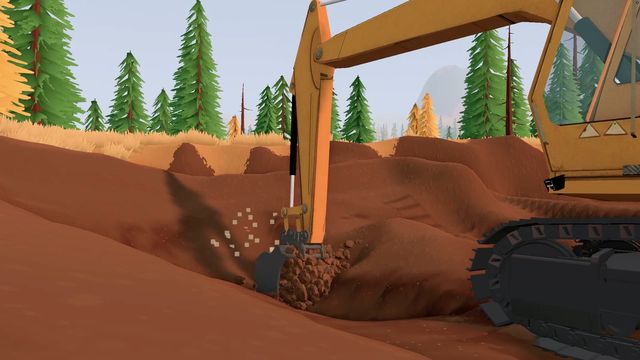
The ground in Groundwork Simulator is not scenery. Dig a trench and you have changed the route every truck takes; cut a hillside and you have created a slope the loader has to climb; pile spoil in the wrong place and you have built a wall across your own haul road. The store page says it plainly: every scoop changes the ground you work on, creating new routes, steeper slopes and fresh challenges.
Dig like the ground is the job
Three habits separate a site that stays workable from one that grinds to a halt.
Cut from the top down. Taking material off the top of a face keeps the slope in front of you gentle and the material falling toward the machine. Undercutting a face gives you an overhang that eventually comes down on the route, and it gives the trucks a wall to climb out of.
Leave the route, not a ruin. The ground you leave behind becomes the foundation for your next job — that is the developer's own framing. Practically: keep the haul corridor wide enough for a loaded truck and a passing machine, keep the grade consistent, and do not let the stockpile creep into the corridor as it grows.
Plan the exit before the entrance. New cuts are easy to start and hard to leave. Before you open a face, decide where the loaded trucks come out and where the empty ones go back in, and whether that loop still works when the cut is twice as deep.
Slopes, traction and the heavy load
The game models mud, slopes and rough ground as decisions rather than obstacles: watch your traction, choose your approach, and take care with a heavy load. Two consequences worth internalising early.
First, traction is a function of the surface, the grade and the load together. The same truck that walks up a dry ramp spins on the same ramp after rain-loaded ground gets cut up by traffic. If a route used to work and now does not, the route changed, not the truck.
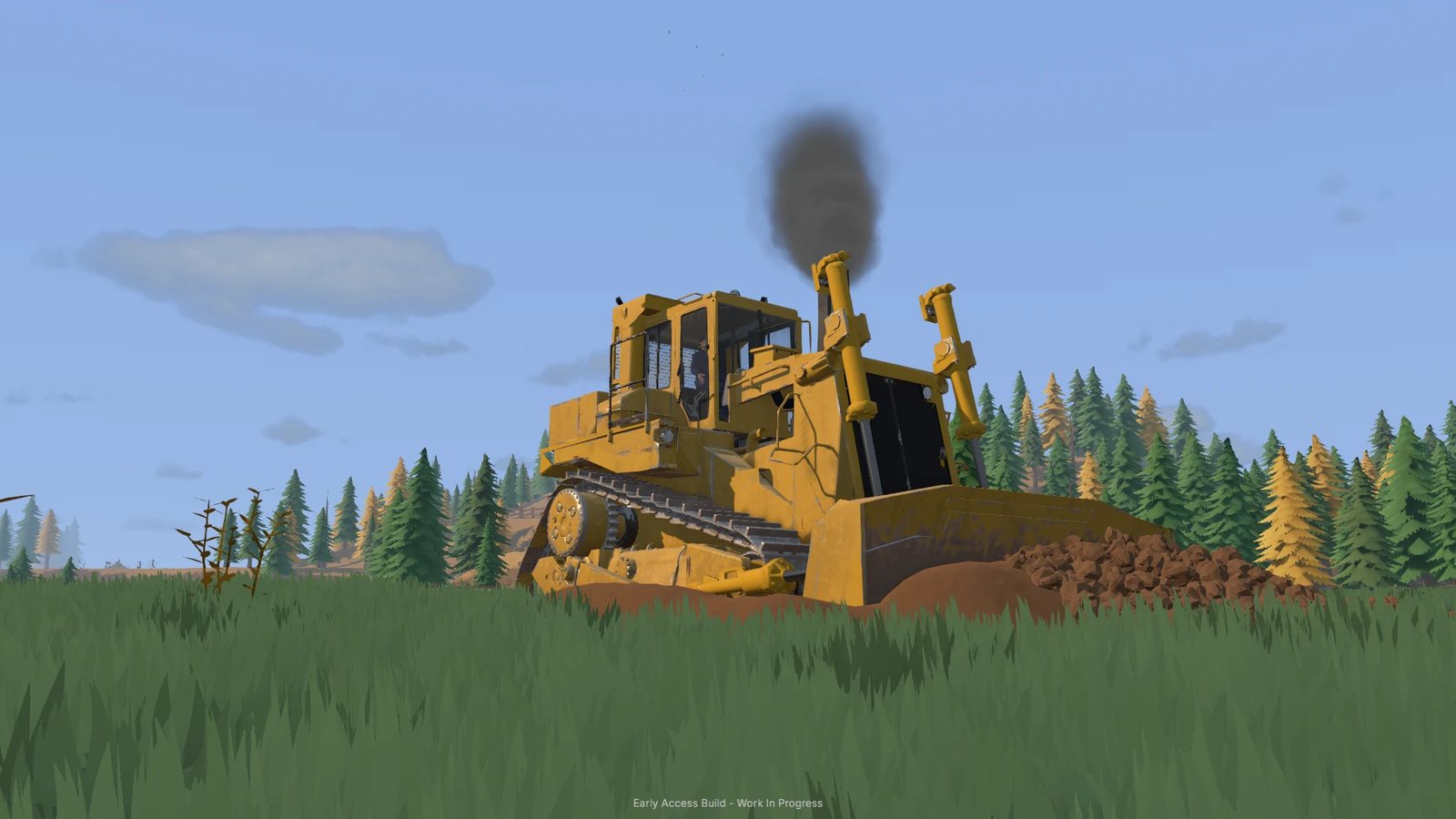
Second, improving the ground is legitimate work. The developer's description includes the line that sometimes the next job is improving the ground beneath your wheels before you can get back to digging. That is the bulldozer earning its place in the fleet: grading the ramp, pushing the soft material out of the ruts, opening the track to the next bench. It feels like not playing the game; it is the game.
Terrain work that pays for itself
| Situation | Cheap fix | Expensive mistake |
|---|---|---|
| Ramp too steep for a loaded truck | Re-grade with the dozer, extend the ramp | Keep sending loaded trucks until the route is destroyed |
| Soft ground at the plant entrance | Push spoil in, grade it flat | Let trucks cut ruts until the plant is unreachable |
| Stockpile blocking the corridor | Move the pile behind the cut | Keep piling until you rebuild the road |
| Water pooling on the route | Cut a drain line with the dozer | Drive through it until the ground is mud |
| Cut face too high to load | Bench it in two steps | Undercut and lose the face |
Transporting the machines, not just the material
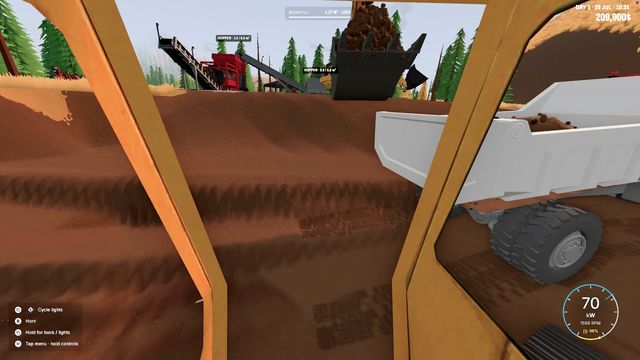
The transport system is part of the terrain problem. Machinery goes onto a trailer and gets hauled by truck, and the store page describes the route planning directly: line up for loading, plan your route, navigate tight turns, slopes and rough terrain with a heavy load behind you. A trailer on a wet grade is the least forgiving thing in the game, and the approach to a new site is where most of the difficulty lives.
So the terrain work does not stop at the cut. Before you move a machine to a new area, drive the route empty once and ask whether the loaded version of that trip is possible. That one habit saves more time than any machine upgrade.
Where to dig next
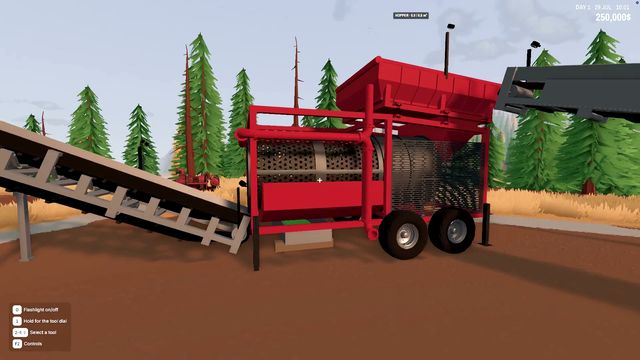
The rule that survives contact with the game is the boring one: finish the hole you are in before you open another. The beginner guide says the same thing from the first-hour side, and the how to play page puts ground work in the loop where it belongs. If the digging works but the gold does not, the problem is downstream — gold washing covers the plant end.