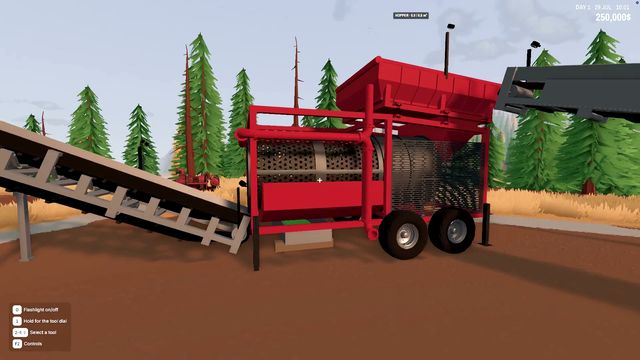
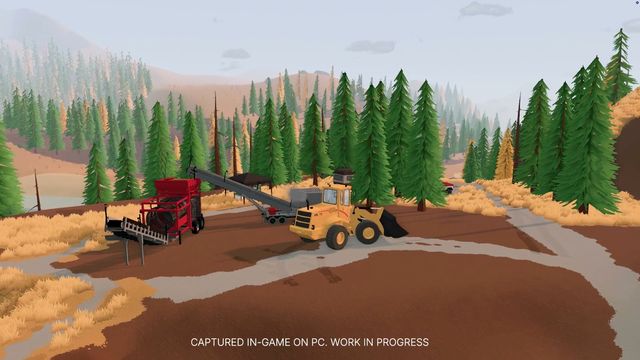
Groundwork Simulator money and progression
The Field Journal is the business end of the game: prices, demand, the ledger and the machine dealer. Read it before you sell, not after.
Sell gold through the Field Journal's gold-price panel, which shows recent price ranges plus a demand figure that refreshes on a daily timer; the company ledger tracks the operation and the machine dealer is where equipment comes from.
Gold in a bucket is not money. In Groundwork Simulator, money happens in the Field Journal — the in-game menu that holds the price panel, the map, the reports and the ledger. Understanding that one menu is the difference between selling whenever the pile looks big and selling when the price makes it worth selling.
The Field Journal, panel by panel
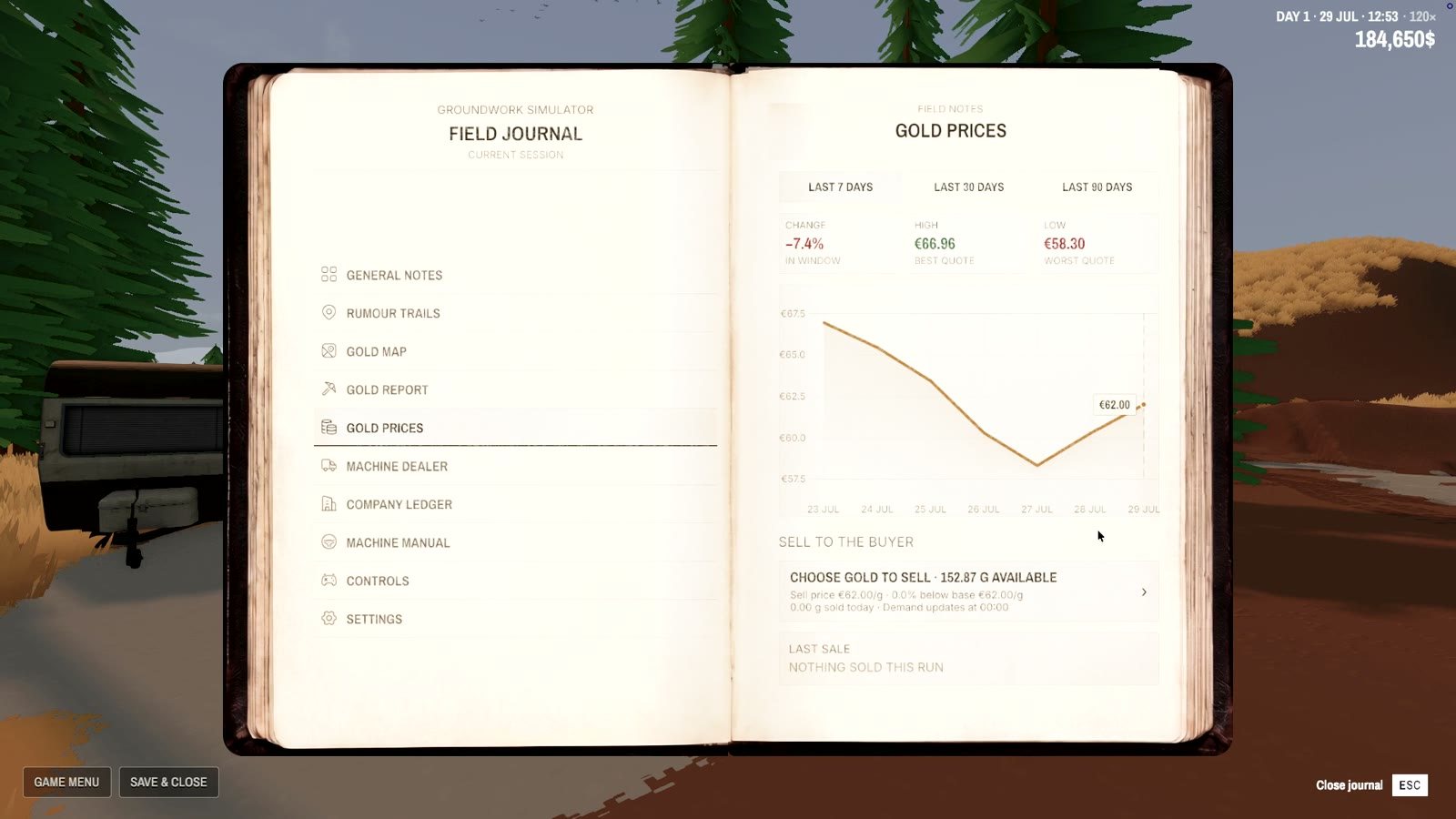
The journal's left column, top to bottom, reads: General Notes, Rumour Trails, Gold Map, Gold Report, Gold Prices, Machine Dealer, Company Ledger, Machine Manual, Controls, Settings. Four of those are business tools, and they do different jobs.
| Panel | What it is for |
|---|---|
| Gold Prices | The market: recent price movement, current selling price and demand |
| Gold Report | The record of what your site has been producing |
| Company Ledger | The operation's books — money in, money out |
| Machine Dealer | Where equipment comes from |
| Gold Map | The full-screen map of where gold-bearing ground is |
| Rumour Trails | Leads and hints rather than hard data |
| Machine Manual | The game's own documentation for each machine |
Reading the price before you sell
The Gold Prices panel is the most consequential screen in the game. It shows the price history across three windows — a short one (seven days), a medium one (thirty) and a longer one (ninety) — each with a high and a low, plus a line chart of recent movement. Below that sits the selling block: how much gold you are offering, and the price per gram you would get for it.
Two behaviours follow from that layout, and neither requires knowing a specific number:
- The window matters more than the number. A price that looks high against the seven-day range can be ordinary against the ninety-day range. Check both before deciding the market is good.
- Demand refreshes on a timer. The panel states when demand updates, on a daily cycle at midnight game time. That is the clock your selling strategy runs on: gold held overnight is gold sold into a different market.
There is no published table of gold values anywhere in the game's official material, and this page will not invent one. The panel is the authoritative number, and it changes.
What actually grows the company
Three levers, in the order they usually matter:
- Throughput. More material washed per hour beats a better price per gram in almost every case, because the price moves on a daily timer and your throughput compounds all day.
- Cost control. The ledger is where you notice that a machine is expensive to run and idle. An idle excavator is still a machine you paid for.
- Timing. Selling into a good day is free money; selling into a bad one is a tax on impatience.
The trap in Early Access is buying capacity you cannot keep busy. The beginner guide frames the same problem from the first hour: buy the bottleneck, not the fantasy.
Rumour Trails and the Gold Map
Two panels help you decide where to dig rather than what to sell.
The Gold Map is a full-screen view of gold-bearing ground, opened from the journal. Players reported a bug on launch day where the map could refuse to close; the workaround that circulated was pressing P or closing it with the X in the top-right rather than Escape. Launch week has the thread and the dates.
Rumour Trails is the softer lead system — hints rather than surveyed data. Treat it as a reason to go drill a spot, not as a substitute for the drill: the how to play page is clear that the test hole is what decides where the cut goes.
The economics of an Early Access launch
Two things about the game's economy are published and worth knowing. The store price is $19.99, discounted from a $24.99 list at launch — that is what you paid, not what the site earns. And the roadmap's Update 2 adds new vehicles with capacity matched to the scale of your operation, which tells you the intended growth curve: the game plans to sell you capacity tiers, so the site you build now should be able to absorb a bigger fleet later.
Practically, that means leaving room. Build the plant where it can be extended, keep the haul corridor wide enough for a second machine, and do not pave yourself into a corner with a layout that only works for the trucks you own today.
Where to go next
If the gold is not coming out of the plant in the first place, the problem is upstream — gold washing covers the chain end to end. If the site cannot keep up with the plant, terrain and haul routes is the page that fixes the laps. And if you are about to spend money on a machine, the machines overview tells you which job you are actually buying.