Groundwork Simulator co-op
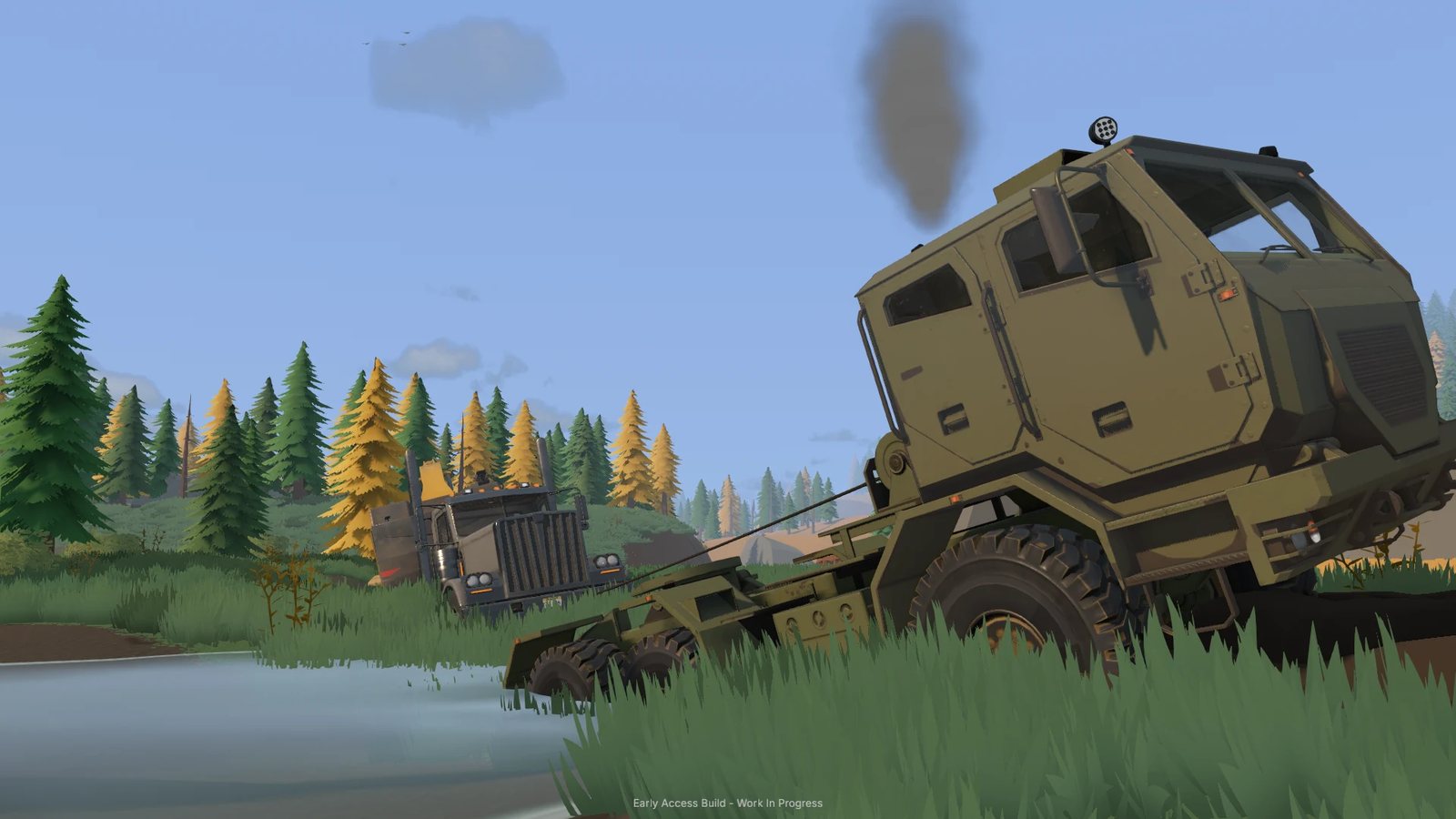
Co-op is the same site with more hands. The official site puts it at solo or up to three friends — the work only pays off if you split the loop, not the same job.
Groundwork Simulator supports single-player and online co-op; the official site describes playing solo or with up to three friends, so four players on one site, and the sensible split is one digging, one hauling, one on the plant.
Groundwork Simulator supports single-player and online co-op. The Steam listing is precise about the categories — Single-player, Multi-player, Co-op, Online Co-op — and the developer's own site is precise about the number: "play solo or with up to 3 friends". That is a four-player site. Anything else you read about player counts is guesswork, including the assumption that it is two-player because the loop sounds like a pair.
The numbers, from the two official sources
| Steam categories | Single-player, Multi-player, Co-op, Online Co-op |
| Official site phrasing | "Play solo or with up to 3 friends" |
| Practical reading | One to four players on one worksite |
| Split-screen / local | Not listed — the co-op category is Online Co-op |
| Dedicated servers | Not described in any official material |
| Cross-play between Windows and macOS | Not described in any official material |
Two of those rows say "not described", and that is the honest answer: the store listing and the official site do not discuss local play, server hosting or cross-platform sessions. The FAQ page answers the same questions in short form.
Why the loop suits four players
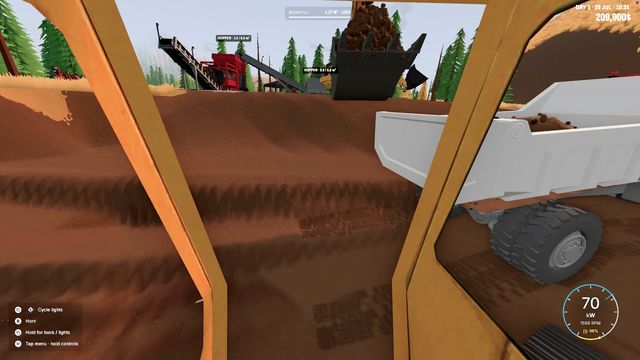
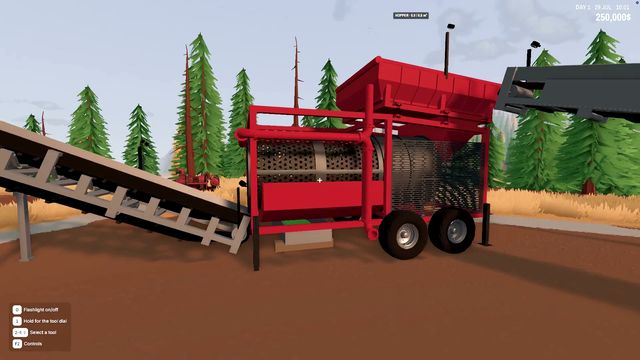
The four-step loop — find, dig, haul, wash — has four natural jobs, and the developer's own description of co-op is built around splitting them: take the excavator while a friend handles transport, or keep material moving together between the digging area and the wash plant, coordinating machines to turn untouched ground into a busy worksite.
That is a division of labour, not a division of the map. Four players each opening their own hole is the fastest way to a site full of half-finished cuts and no functioning plant.
A split that works
| Player | Job | Owns | Do not do this |
|---|---|---|---|
| One | Cut | Excavator at the face, keeps the truck fed | Wander off to run the plant |
| Two | Haul | Loader and truck, keeps the route clear | Cut the face with the loader |
| Three | Plant and water | Plant feed, sluice flow, hose runs | Let the stockpile outgrow the feed |
| Four | Ground and sales | Dozer on the route, price checks, dealer | Grade the route the trucks are using |
With three players, fold ground work and sales into the plant player; with two, one digs and one hauls, and the plant runs only as fast as the haul allows.
Agree these four things before the first dig
- Where the cut is. One face, chosen by whoever drilled the test hole, and nobody opens a second one because they are bored.
- Where the route is. The haul corridor is a shared asset; if one player grades it while another drives it, both lose.
- Who sells. Sales are a Field Journal action on a price that refreshes daily. With one person deciding, you stop double-selling at a bad price.
- What the next purchase is. One machine at a time, aimed at the current bottleneck. Four players buying four things is how a co-op site stalls.
The co-op-specific problems
Because the site is shared, mistakes are shared too. The route you cut up is the route the other three drive on; the stockpile you build beside the plant is the pile that blocks the loader's lap. Voice chat does more for this game than any guide: the loop is a sequence of handoffs, and a handoff without communication is a queue.
The launch build also has the same stability issues solo players hit — startup crashes and controller mapping complaints were the loudest threads — plus the general Early Access caveat that a session can be lost to a crash. Launch week tracks what players reported and what worked around it.
Where to go from here
Read how to play so all four of you agree on the loop before the first session, and machines overview so nobody has to be told twice which machine is for what. If you are playing solo, the beginner guide is the better starting point — the same loop with fewer hands.